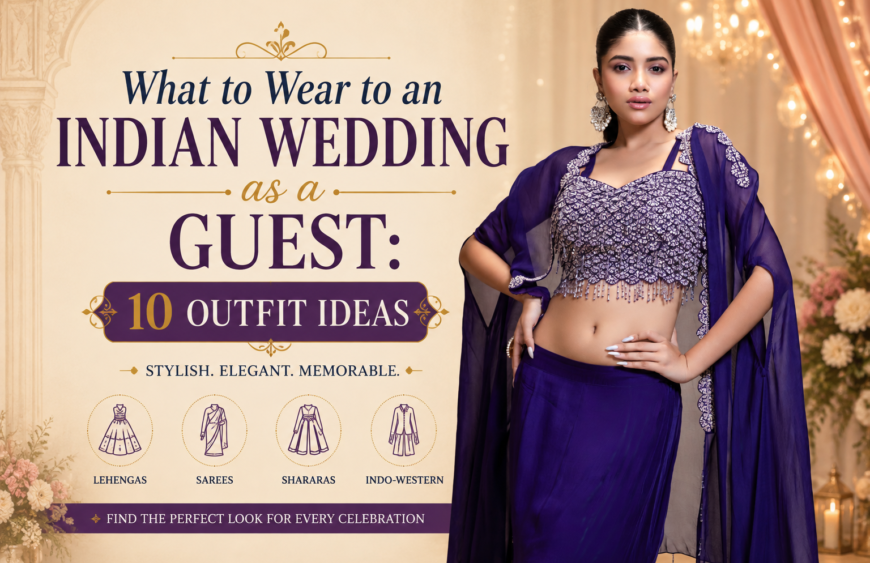
Indian weddings have a way of making even a simple family gathering feel like a celebration. There is music playing somewhere, relatives arriving in their best clothes, endless food, photographs at every corner and a different function almost every day.
And then comes the question: What should I wear to an Indian wedding as a guest?
It can be surprisingly difficult to decide. You want to look dressed up, but you don’t want to wear something that feels uncomfortable after a few hours. You want your outfit to look festive in photographs, but you also want something that suits the function you are attending.
The good news is that you have plenty of choices.
From classic Anarkali suits and colourful sharara & gharara suits to statement lehengas, comfortable kurta sets and modern Indo-Western outfits, there is no shortage of options for Indian wedding guests.
The key is choosing an outfit according to the function, time of day and your own style.
Here are some ideas to help you decide what to wear to an Indian wedding as a guest.
Table of Contents
1. Anarkali Suit for a Classic Wedding Guest Look
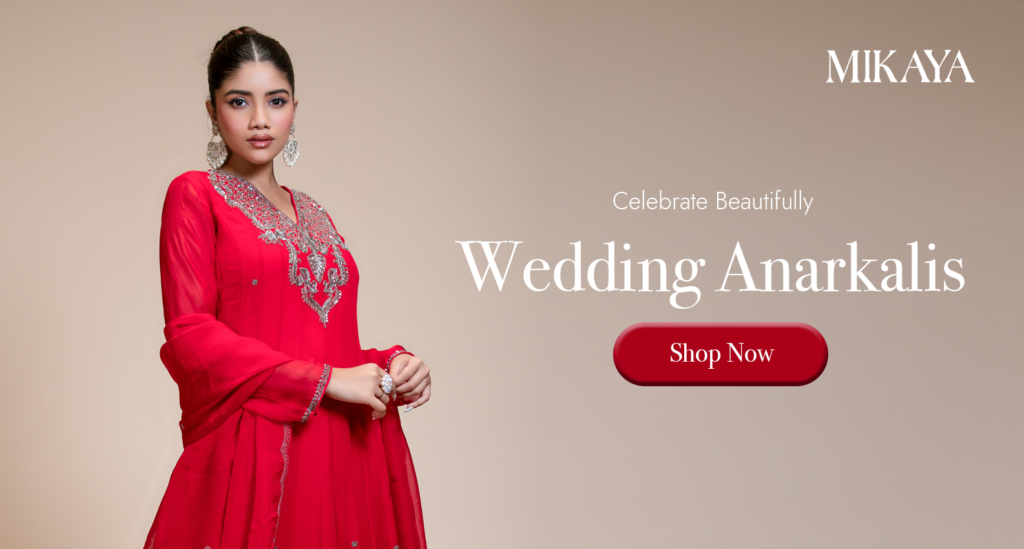
Anarkali suits are one of the easiest choices when you want to look traditionally dressed without going for a lehenga.
The long, flowing kurta gives the outfit a festive appearance, while the matching pants and dupatta keep it comfortable enough for long wedding functions.
An embroidered Anarkali can work beautifully for the wedding ceremony, reception or an evening family gathering. For daytime functions, you can choose lighter colours and softer embroidery.
Colours such as royal blue, pink, green, wine, mustard and ivory can all work well depending on the occasion.
Pair your Anarkali with jhumkas, bangles and embellished footwear. If the outfit already has detailed embroidery, you don’t need to add too much jewellery.
An Anarkali is especially useful if you have several wedding functions to attend because you can change the accessories and create a different look each time.
2. Indo-Western Sets for a Modern Wedding Guest
Not everyone wants to dress traditionally from head to toe.
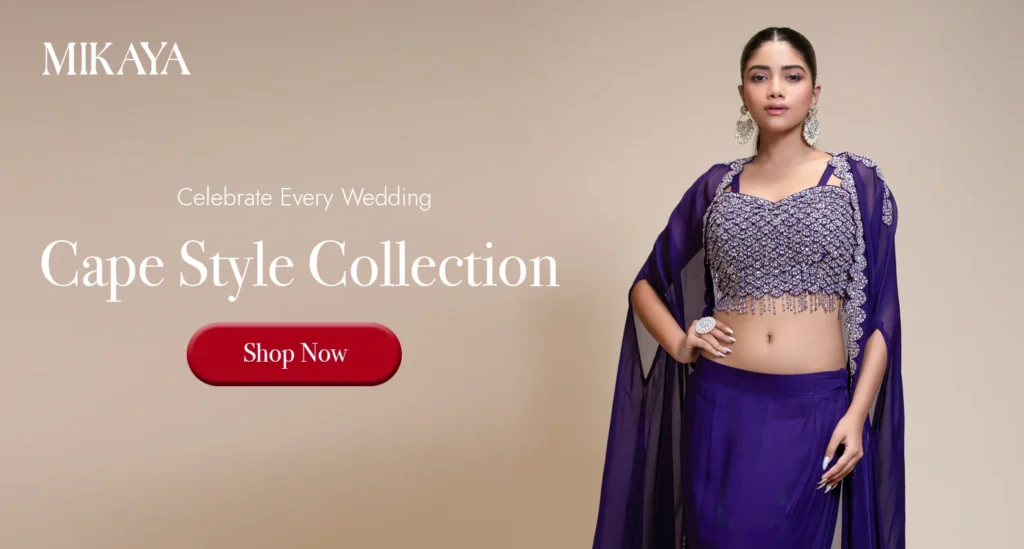
If you prefer contemporary fashion, an Indo-Western set can give you the right balance between Indian and modern styling.
You can look for sets featuring interesting cuts, modern necklines, statement sleeves, embroidered tops or contemporary pants. These outfits are particularly suitable for cocktail-style wedding events, pre-wedding parties and modern receptions.
The beauty of Indo-Western outfits is that they give you plenty of freedom with accessories.
Pair your outfit with statement earrings and heels for a dressier appearance, or choose flats and minimal jewellery for a more relaxed celebration.
If you’re wondering what to wear to an Indian wedding as a guest when the invitation doesn’t feel very traditional, an Indo-Western set is a safe and stylish choice.
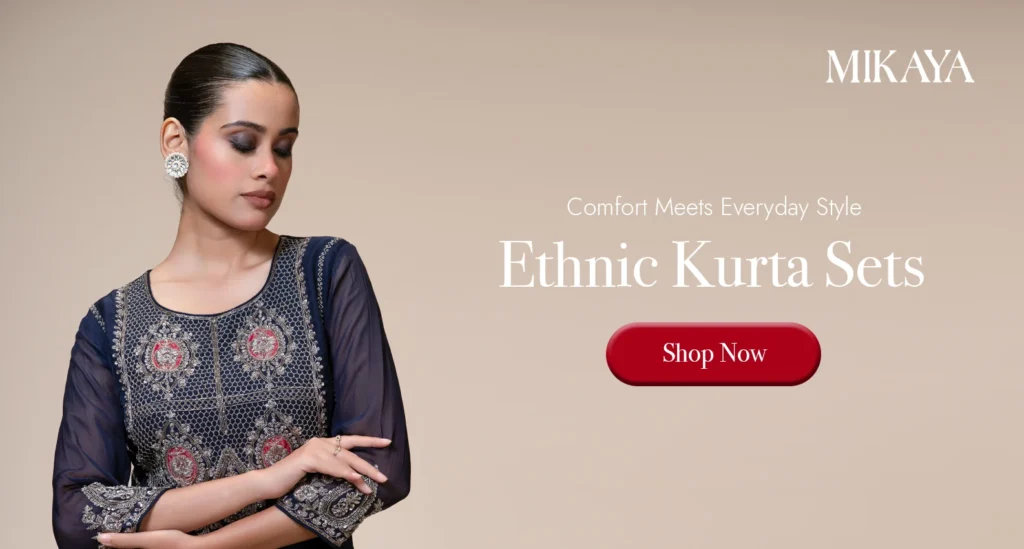
3. Kurta Sets for a Comfortable Daytime Function
Wedding celebrations can be long. Sometimes you may be attending a morning ceremony, spending several hours with family or moving between different venues.
This is where a kurta set can be a great choice.
A well-designed kurta with matching pants or palazzos can look festive while remaining comfortable. Choose embroidery, printed details or an attractive dupatta to make the outfit feel more suitable for a wedding.
For daytime events such as haldi, mehendi or a small family ceremony, lighter colours can work particularly well.
Pastel pink, peach, yellow, powder blue and green can create a fresh appearance without looking too formal.
If you prefer simple wedding guest outfits for women, a detailed kurta set can give you a polished look without making you feel overdressed.
4. Lehenga for a Grand Wedding Celebration
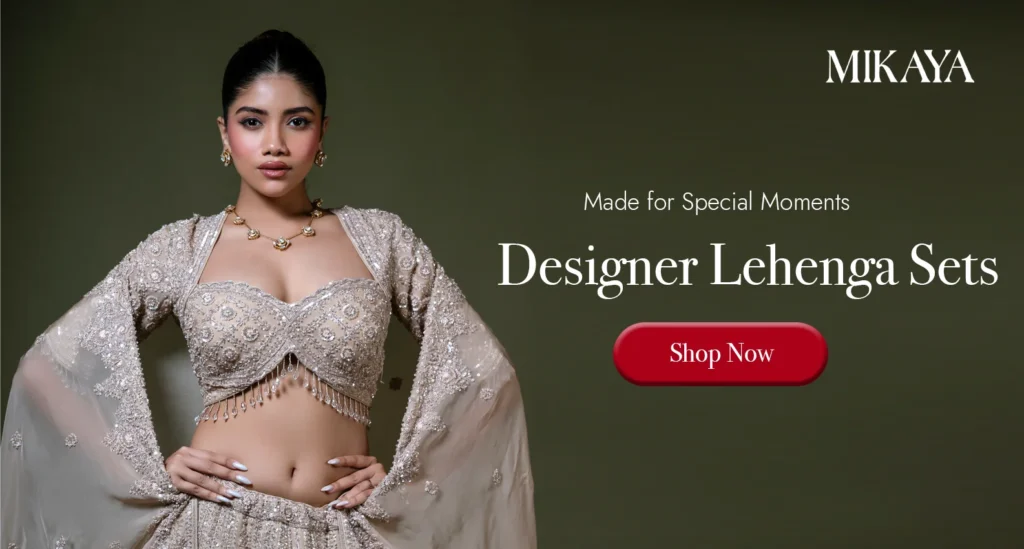
When the wedding calls for something more glamorous, a lehenga is an obvious choice.
You don’t need to choose a heavily bridal design. As a guest, you can opt for lighter embroidery, colourful fabrics and interesting blouse designs.
A lehenga can be especially suitable for the sangeet or reception, where guests often dress more formally.
For a daytime wedding, softer colours and lighter fabrics can work well. For an evening reception, deeper colours and embellishments can create a richer look.
If your lehenga has a lot of embroidery, keep your jewellery balanced. Statement earrings, a bracelet and a small clutch may be enough.
Most importantly, avoid choosing something that looks too close to bridal wear. You want to celebrate the couple without competing with the bride.
5. Ready-to-Wear Drape Sarees for an Easy Traditional Look
Sarees have always been a favourite for Indian weddings, but traditional saree draping can take time.
If you love the saree look but want something easier to wear, ready-to-wear drape sarees are worth considering.
A pre-shaped saree gives you the appearance of a traditionally draped saree while making the dressing process much simpler.
This can be particularly useful if you’re attending a wedding after a busy day or have multiple functions to attend.
Choose an embellished drape saree for an evening reception or a lighter design for a daytime ceremony.
Pair it with statement earrings, bangles and a clutch. You can keep the hairstyle simple with soft waves or a neat bun.
The result feels traditional without requiring you to spend ages getting every pleat right.

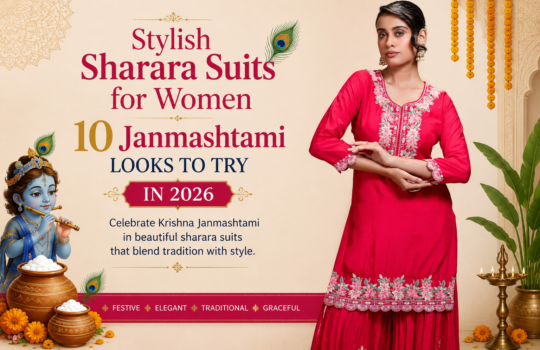
6. Sharara & Gharara Suits for Mehendi and Sangeet
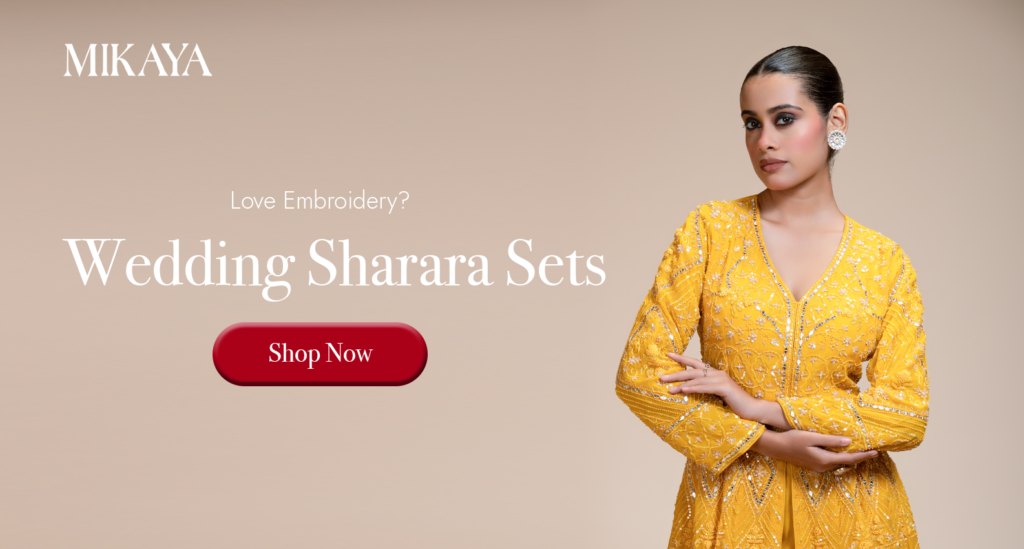
If you want something festive, comfortable and a little different from the usual suit, sharara & gharara suits are excellent choices.
The wide flare creates movement and gives the outfit a lively appearance, making it particularly suitable for mehendi and sangeet functions.
For a mehendi, you can choose brighter shades such as yellow, green, orange or pink. For an evening sangeet, deeper colours with embroidery, sequins or mirror work can create a more dressed-up look.
A gharara gives you a slightly more traditional appearance, while a sharara can feel more relaxed and youthful.
Pair either style with jhumkas, bangles and comfortable footwear. If you’re expecting to dance at the sangeet, comfort becomes especially important.
What to Wear for Different Indian Wedding Functions
One of the easiest ways to decide what to wear to an Indian wedding as a guest is to first understand the function.
You don’t have to wear your most elaborate outfit to every event.
Haldi
Haldi is usually colourful, cheerful and full of movement. Choose something lightweight and easy to manage.
A yellow kurta set, simple sharara or colourful Indo-Western set can work beautifully.
Avoid extremely heavy embroidery because Haldi celebrations can get messy, and you want to enjoy yourself without worrying about your clothes.
Mehendi
The mehendi function is a great opportunity to wear bright colours.
A sharara suit, gharara or colourful kurta set can be perfect. Green, pink, orange and yellow are particularly fun choices.
Choose comfortable footwear because you may be sitting for a while getting your mehendi done.
Sangeet
The sangeet is your chance to dress up a little more.
A lehenga, embroidered sharara or Indo-Western set can work beautifully.
If you’re planning to dance, make sure the outfit allows you to move comfortably. A very heavy dupatta or extremely long lehenga can become difficult to manage.
Wedding Ceremony
For the actual wedding ceremony, traditional Indian clothing is always a good choice.
Anarkali suits, lehengas, drape sarees and detailed sharara sets can all work.
Choose your outfit according to the time of the ceremony. Lighter colours and fabrics can be suitable for daytime weddings, while richer shades can work well for evening ceremonies.
Reception
The reception usually allows you to go a little more glamorous.
A statement lehenga, embroidered Anarkali, ready-to-wear drape saree or sophisticated Indo-Western outfit can all make good choices.
This is where you can bring out your favourite jewellery and a more polished hairstyle.
How to Choose the Right Colour
Colour can completely change how an outfit looks.
For daytime wedding functions, pastel shades, yellow, peach, pink, powder blue and green can create a fresh appearance.
For evening events, you can choose deeper colours such as navy, wine, maroon, emerald, royal blue or dark pink.
Metallic details such as gold and silver can add a festive touch without requiring the entire outfit to be heavily decorated.
There is also nothing wrong with wearing bright colours. Indian weddings are celebrations, after all.
The only colour rule worth keeping in mind is to avoid looking too bridal unless the couple has specifically asked guests to follow a particular theme.
How to Accessorise Your Wedding Guest Outfit
Accessories can make a simple outfit look much more festive.
If you’re wearing an Anarkali or sharara, jhumkas or chandbalis are easy choices. A few bangles can add colour and movement.
For a lehenga, you can choose statement earrings or a necklace depending on the neckline.
With a drape saree, traditional earrings and bangles can create a classic appearance.
Don’t feel like you need to wear every piece of jewellery you own.
If your outfit has heavy embroidery, let it stand out. If you’re wearing a simple ethnic outfit, that’s when you can use jewellery to add more personality.
A small clutch is also useful for keeping your phone, keys and other essentials while keeping your hands free during the celebration.
Don’t Forget the Footwear
The right footwear can make a huge difference at a wedding.
You may be standing during ceremonies, walking between venues, dancing at the sangeet or spending hours taking photographs.
Beautiful footwear is great, but comfort matters too.
Juttis, embellished flats, block heels and low heels are practical choices. If you are comfortable wearing higher heels, save them for occasions where you won’t be moving around too much.
There’s nothing worse than reaching the dance floor and realising your shoes are impossible to stand in.
How to Look Festive Without Going Overboard
When deciding what to wear to an Indian wedding as a guest, remember that you don’t need the heaviest outfit in the room.
A simple Anarkali with beautiful earrings can look just as attractive as a heavily embellished lehenga.
A plain kurta set can feel festive when paired with a statement dupatta.
A simple drape saree can look special with the right blouse and jewellery.
And a sharara can make a strong impression without excessive decoration.
Instead of adding more and more details, focus on one or two things you really love about your outfit.
Maybe it is the colour. Maybe it is the embroidery. Maybe it is the blouse or the dupatta.
Let that be the star.
Build a Wedding Wardrobe You Can Actually Reuse
Wedding season can become expensive when you buy a completely different outfit for every function.
Instead, look for Indian ethnic wear for women that can be styled in different ways.
A versatile Anarkali can be worn to a wedding ceremony, festive dinner and family function.
A kurta set can work for mehendi, puja and smaller celebrations.
A sharara can be styled differently for a sangeet and another festive event.
A drape saree can move from a wedding reception to a festive dinner simply by changing the jewellery and blouse.
Even a lehenga can be given a different appearance by pairing the skirt with another blouse or changing the dupatta.
This approach gives you more options without filling your wardrobe with outfits you may only wear once.
What Makes the Best Wedding Guest Outfit?
The best wedding guest outfit is not necessarily the most expensive or heavily decorated one.
It is the outfit that fits the occasion, feels comfortable and makes you feel good when you look in the mirror.
Think about the venue, the time of day, the weather and how long you will be wearing the outfit.
Then think about yourself.
Do you feel most comfortable in a flowing Anarkali? Do you love wearing a lehenga? Would you rather wear a comfortable kurta set? Maybe you prefer a modern Indo-Western look.
There is no wrong answer.
Indian fashion gives you plenty of room to find your own style.
1. What should I wear to an Indian wedding as a guest?
You can choose an Anarkali suit, lehenga, sharara suit, kurta set, Indo-Western set or ready-to-wear drape saree. Pick your outfit based on the wedding function, time of day and how comfortable you want to feel.
2. What should a woman wear to an Indian wedding?
Women can choose from many types of Indian ethnic wear, including Anarkali suits, lehengas, sharara and gharara suits, kurta sets and sarees. For a modern look, an Indo-Western set can also be a great option.
3. What should I wear to a Mehendi or Sangeet function?
A colourful sharara suit, gharara, lehenga or Indo-Western set works well for Mehendi and Sangeet functions. Choose a comfortable outfit that allows you to move freely, especially if you plan to dance.
4. Can I wear an Anarkali suit to an Indian wedding?
Yes. An Anarkali suit is a versatile wedding guest outfit that works for ceremonies, receptions and family functions. Choose lighter embroidery for daytime events and richer detailing for evening celebrations.
5. What should I avoid wearing as an Indian wedding guest?
Avoid outfits that are extremely uncomfortable or difficult to manage for long celebrations. It is also better to avoid heavily bridal-looking designs unless the couple has specifically requested them. Choose an outfit that feels festive while allowing you to enjoy the wedding.
Final Thoughts
So, what to wear to an Indian wedding as a guest?
The answer depends on the function and, more importantly, what makes you feel comfortable and confident.
Choose an Anarkali suit for a classic traditional look, an Indo-Western set when you want something modern, or a kurta set for a comfortable daytime celebration.
Go for a lehenga when you want a grander look, a ready-to-wear drape saree when you love the saree style without the complicated draping, or a sharara & gharara suit when you want something festive and full of movement.
And don’t forget that wedding dressing is supposed to be fun.
You are there to celebrate someone’s special day, catch up with family, dance with friends, eat far too much good food and probably take more photographs than you planned.
Choose an outfit that lets you do all of that.
Because the best wedding guest look is the one you can enjoy wearing from the first ceremony to the last photograph.